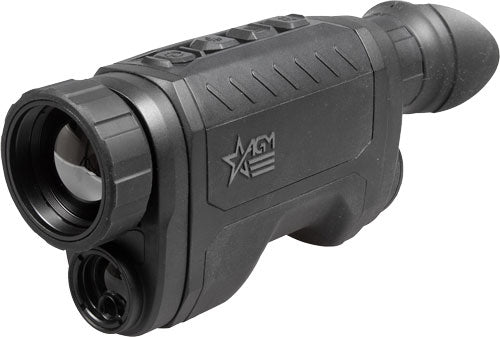
AGM ReachIR LRF 35-640 Thermal Monocular — 640x512, 1,000m Rangefinder
- Regular price
-
$2,495.00 - Regular price
-
$2,695.00 - Sale price
-
$2,495.00
The ReachIR LRF 35-640 is the best price-to-capability ratio in our thermal lineup. A full 640x512 sensor, sub-20 mK sensitivity, and a 1,000-meter laser rangefinder built into the same magnesium housing — for hundreds less than comparable rangefinding thermals from the bigger names.
A Real 640 Sensor, Not A Marketing One
The 640x512 VOx uncooled detector runs a 12µm pixel pitch at a 50Hz refresh rate, with NETD rated under 20 mK. Resolution is what separates a thermal that shows you a warm blob from one that shows you enough shape to know what you are looking at, and 640 is the tier where identification becomes genuinely reliable rather than a guess. The sub-20 mK sensitivity is what keeps that resolution useful when fog, humidity, or a post-rain temperature washout flattens the scene.
Behind it sits a 35mm F1.0 objective with 2x base magnification and digital zoom through 4x, 8x, and 16x. Detection range on a six-foot object reaches 1,800 yards. Field of view is 12.5° x 10.0° — a balanced window that scans reasonably fast while still reaching across open country.
The Rangefinder Is The Point
The integrated laser measures to 1,000 meters with ±1 meter accuracy. For recovery work in broken terrain, knowing a heat signature sits at 380 yards instead of 180 changes how you plan the walk in — which drainage you drop into, whether you go now or wait for light. Carrying a separate rangefinder means one more thing on the harness and one more thing to find in the dark. Having both functions in one unit is the whole argument for this class of optic.
Field Practicalities
Power comes from a single removable 18650 cell — non-proprietary, so spares cost a few dollars rather than a few hundred. Runtime is up to 4.5 hours with Wi-Fi and the rangefinder off, which is the shortest in our thermal lineup and the one real trade here. Plan on carrying two or three cells for a full night, or run it off USB-C from a power bank.
The magnesium alloy body carries an IP67 rating and operates from -22°F to 131°F. The 1024x768 OLED display is sharp enough to show what the sensor is actually resolving. Picture-in-picture, hotspot tracking, and four palettes — black hot, white hot, red hot, and fusion — cover the practical range. There is 64GB of onboard storage for photo and video, plus Wi-Fi through the AGM Connect app.
Key Specifications
- Thermal Sensor: 640x512, 12µm pixel pitch, VOx uncooled
- NETD: <20 mK
- Objective Lens: 35mm F1.0
- Magnification: 2-16x (1x, 2x, 4x, 8x digital zoom)
- Laser Rangefinder: Up to 1,000 m / 1,093 yards, ±1 m accuracy
- Detection Range: 1,800 yards on a 6-foot object
- Field of View: 12.5° x 10.0°
- Display: 1024x768 OLED, 0.39", 50 FPS
- Refresh Rate: 50Hz
- Battery: One removable 18650, up to 4.5 hours
- Weight: 14.1 oz without battery
- Dimensions: 7.28" x 2.09" x 3.46"
- Body: Magnesium alloy, IP67
- Operating Temperature: -22°F to 131°F
- Palettes: Black Hot, White Hot, Red Hot, Fusion
- Storage: 64GB eMMC, Wi-Fi via AGM Connect app
- Diopter Adjustment: -5 to +3
Worth Knowing Before You Buy
The 4.5-hour battery is the honest weak point — budget for spare 18650s. Four palettes is fewer than the eight Pulsar offers, though in practice most people settle on one and stay there.
If you want the same sensor class without ranging and in a lighter package, the Nocpix Lumi H35 comes in under 12 ounces. If you need more reach, the 50mm version of the ReachIR pushes detection to 2,600 yards with a narrower field of view.
Thermal detects heat, not detail. It will not let you judge antlers or age an animal — use it to find and confirm, then switch to glass. Check your state's regulations before taking any thermal device afield, since rules on thermal use for hunting vary considerably by state and by species.